Bhutan Map
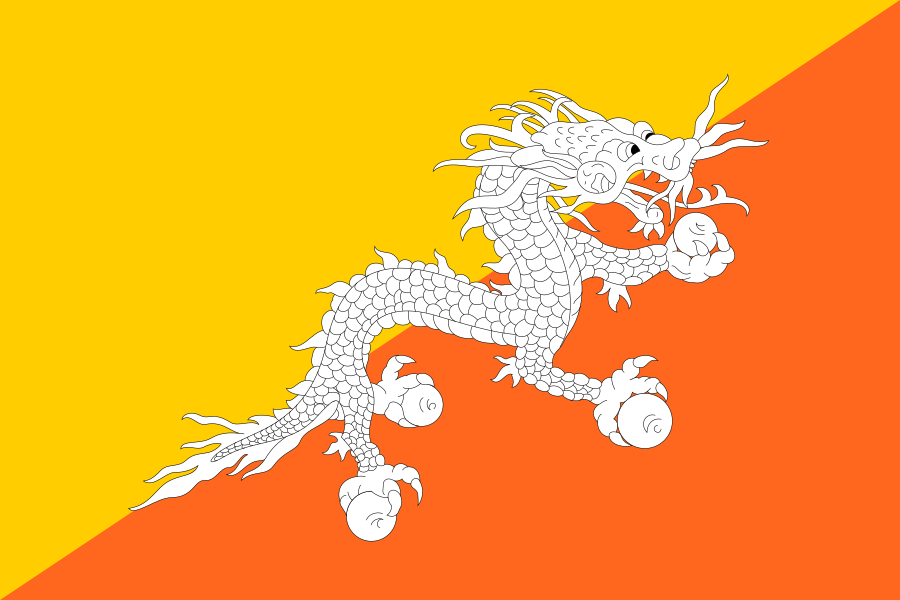
Capital: Thimphu
Population: 796,682
Area: 38,394 km²
Currency: BTN
Languages: Dzongkha
Religions: Buddhism
Time zone: UTC+6
Bhutan is a small landlocked kingdom nestled in the Eastern Himalayas between China and India. With an area of 38,394 square kilometers and a population of approximately 797,000 people, Bhutan is one of the world's most isolated and least developed nations. The capital city, Thimphu, is unique as one of only two capital cities in the world without traffic lights. Bhutan remained largely closed to the outside world until the 1960s and continues to carefully manage tourism and modernization to preserve its culture and environment. The country is a constitutional monarchy, having transitioned from absolute monarchy to democracy in 2008.
Bhutan's geography is dominated by the Himalayas, with elevations ranging from 100 meters in the southern foothills to over 7,500 meters at Gangkhar Puensum, the world's highest unclimbed mountain. The country's dramatic topography features deep valleys, swift-flowing rivers, and snow-capped peaks. The climate varies greatly with elevation, from subtropical in the southern plains to alpine conditions in the high mountains. Approximately 70% of Bhutan is covered by forest, which the constitution mandates must remain above 60% for all time, making Bhutan one of the world's only carbon-negative countries. The country experiences monsoon rains from June to September, with the rest of the year being relatively dry.
Bhutan's economy is one of the world's smallest, with a GDP per capita of approximately $3,500. The economy is primarily based on agriculture and forestry, which employ about 60% of the population. Hydroelectric power generation has become increasingly important, with electricity exports to India being a major revenue source. Tourism is carefully managed through a "high value, low impact" policy that requires visitors to pay a minimum daily fee, helping preserve the environment and culture while generating income. Bhutan famously prioritizes Gross National Happiness over Gross Domestic Product as a measure of development. Other economic activities include handicrafts, cement production, and fruit processing. The economy faces challenges due to its small size, limited infrastructure, and geographic remoteness.
Bhutanese culture is deeply rooted in Tibetan Buddhism, which influences every aspect of life. Dzongkha is the official language, though many local dialects are spoken across different regions. The country is known for its distinctive architecture, particularly dzongs (fortress-monasteries) that serve as administrative and religious centers. Bhutan is famous for its traditional dress, with men wearing the gho and women wearing the kira, which are mandatory in schools and government offices. The country celebrates numerous colorful festivals called tsechus, featuring mask dances and religious performances. Bhutan has never been colonized and has maintained its unique cultural identity. The philosophy of Gross National Happiness guides government policy, emphasizing sustainable development, cultural preservation, environmental conservation, and good governance. Archery is the national sport, and the country's peaceful Buddhist heritage promotes non-violence and environmental stewardship.
Major Cities
- Thimphu - The capital with 115,000 people, one of only two world capitals without traffic lights and Bhutan's political center
- Phuntsholing - Border city with 27,000 people, the commercial hub and gateway to India in the south
- Paro - Western city with 11,000 people, home to Bhutan's only international airport and the iconic Tiger's Nest monastery
- Punakha - Former capital with 6,500 people, featuring the stunning Punakha Dzong at the confluence of two rivers
- Gelephu - Central-southern town with 9,200 people, an important trading center near the Indian border
Interesting Facts
- Bhutan measures success by Gross National Happiness (GNH) rather than GDP, prioritizing well-being over economic growth
- The country is carbon-negative, absorbing more CO2 than it produces, with over 70% forest coverage mandated by the constitution
- Gangkhar Puensum at 7,570 meters is the world's highest unclimbed mountain, with mountaineering banned since 2003
- Bhutan banned tobacco sales nationwide in 2004, becoming one of the first countries to do so
- Traditional dress is mandatory in schools, government offices, and formal occasions to preserve cultural identity
- Tourism is carefully controlled with a minimum daily fee to maintain "high value, low impact" sustainable tourism