Brunei Map
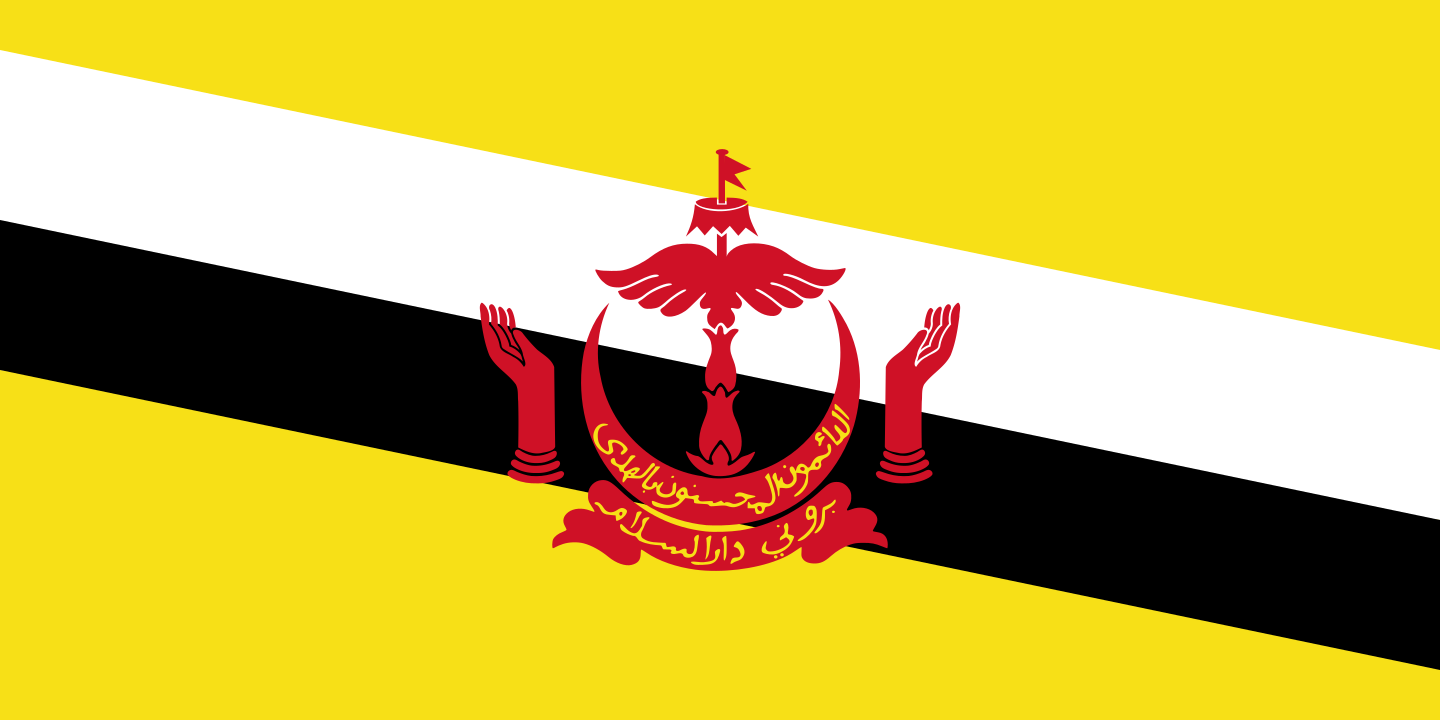
Capital: Bandar Seri Begawan
Population: 466,330
Area: 5,765 km²
Currency: BND
Languages: Malay
Religions: Islam
Time zone: UTC+8
Brunei, officially Brunei Darussalam, is a small but wealthy nation located on the northern coast of the island of Borneo in Southeast Asia. With an area of 5,765 square kilometers and a population of approximately 466,000 people, Brunei is surrounded by the Malaysian state of Sarawak, which divides the country into two separate parts. The capital, Bandar Seri Begawan, is home to about 100,000 people and features the magnificent Sultan Omar Ali Saifuddien Mosque and the opulent Istana Nurul Iman, the world's largest residential palace. Brunei gained full independence from British protection in 1984 and is an absolute monarchy ruled by Sultan Hassanal Bolkiah, one of the world's longest-reigning and wealthiest monarchs.
Brunei's geography is characterized by coastal plains rising to mountainous terrain inland, covered predominantly by tropical rainforest. The country is divided into four districts, with the Temburong District separated from the rest of the country by Malaysian territory. Approximately 70% of Brunei remains covered by pristine rainforest, home to diverse wildlife including proboscis monkeys, orangutans, and numerous bird species. The country experiences a tropical climate with high humidity and temperatures averaging 28°C year-round. Brunei receives abundant rainfall, particularly during the northeast monsoon from November to March. The Brunei River and its tributaries have historically been vital for transportation and settlement. The Ulu Temburong National Park showcases the country's commitment to conservation and eco-tourism.
Brunei's economy is almost entirely dependent on its extensive petroleum and natural gas fields, which account for over 90% of exports and government revenue. With a GDP per capita of approximately $31,000, Brunei enjoys one of the highest standards of living in Asia. The oil and gas sector has made the country extraordinarily wealthy relative to its size, enabling the government to provide citizens with free education, healthcare, subsidized housing, and no personal income tax. However, recognizing the finite nature of hydrocarbon resources, the government has been attempting to diversify the economy through its Brunei Vision 2035, focusing on developing sectors such as Islamic finance, halal industry, and eco-tourism. The country faces challenges in creating private sector employment and reducing dependence on oil revenues.
Bruneian culture is deeply influenced by Malay Islamic Monarchy (MIB) philosophy, which combines Malay culture, Islamic religion, and monarchical governance as the foundation of national identity. Malay is the official language, though English is widely spoken and used in business and education. Islam is the state religion, and the country follows a conservative interpretation of Sharia law. Traditional cultural practices include the wearing of traditional dress for official occasions and the celebration of Islamic festivals. The water village Kampong Ayer, built on stilts over the Brunei River, has existed for centuries and remains inhabited, earning the nickname "Venice of the East." Bruneian crafts include boat-making, silverwork, and weaving. The country prohibits the sale and public consumption of alcohol. Despite its wealth and modernization, Brunei maintains strong traditional values and has preserved much of its natural environment and cultural heritage.
Major Cities
- Bandar Seri Begawan - The capital with 100,000 people, home to the magnificent Omar Ali Saifuddien Mosque and world's largest palace
- Kuala Belait - Oil industry center with 31,000 people, the second-largest town and economic hub of the western district
- Seria - Oil town with 30,000 people, the birthplace of Brunei's oil industry in 1929
- Tutong - Central town with 20,000 people, known for its traditional markets and agricultural activities
- Bangar - Town in Temburong with 3,500 people, gateway to Ulu Temburong National Park's pristine rainforest
Interesting Facts
- Istana Nurul Iman is the world's largest residential palace with 1,788 rooms, belonging to Sultan Hassanal Bolkiah
- Brunei has one of the highest GDP per capita in Asia at $31,000, with no personal income tax for citizens
- Over 70% of the country remains covered by pristine tropical rainforest, home to orangutans and proboscis monkeys
- Kampong Ayer water village has existed for over 600 years and houses 30,000 people in stilted homes over the river
- Oil and gas account for over 90% of exports and government revenue, making the economy heavily resource-dependent
- Sultan Hassanal Bolkiah has ruled since 1967, making him one of the world's longest-reigning and wealthiest monarchs