Cambodia Map
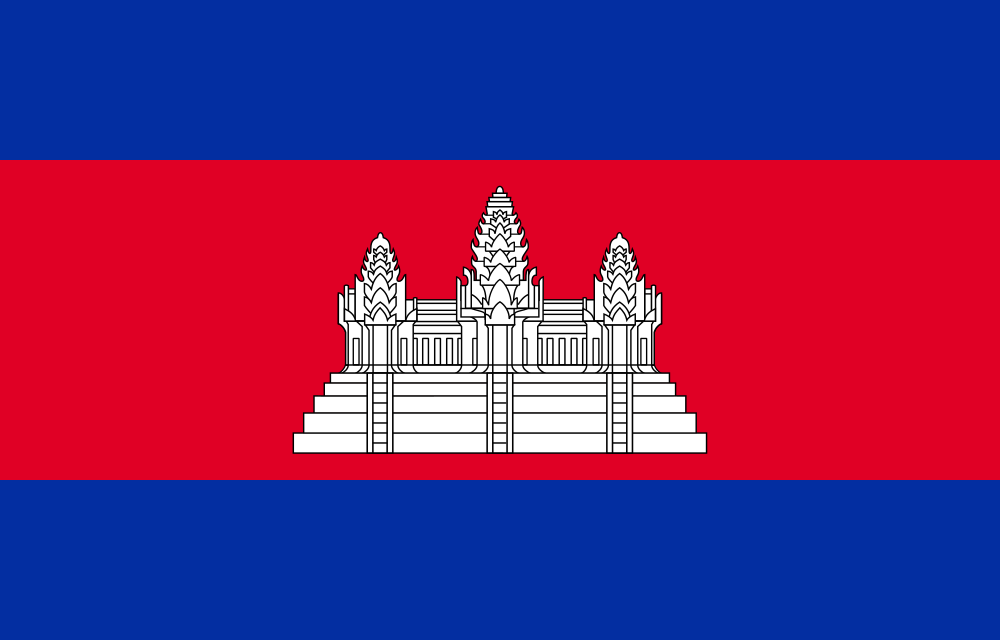
Capital: Phnom Penh
Population: 17,847,982
Area: 181,035 km²
Currency: KHR
Languages: Khmer
Religions: Buddhism
Time zone: UTC+7
About Cambodia
Cambodia is located in Southeast Asia on the Indochinese Peninsula, bordered by Thailand to the northwest and west, Laos to the north, Vietnam to the east and southeast, and the Gulf of Thailand to the southwest. Covering approximately 181,035 square kilometers, Cambodia is home to nearly 18 million people. The country's heartland is dominated by the fertile floodplains of the Mekong River and Tonle Sap Lake, Southeast Asia's largest freshwater lake, which provides vital resources and sustains much of the population.
Cambodia has a rich history dating back to the powerful Khmer Empire (9th-15th centuries), which built the magnificent temple complex of Angkor Wat, now a UNESCO World Heritage site and symbol of national pride. After centuries of varying external influences and French colonial rule, Cambodia gained independence in 1953. The Khmer language is official, and Theravada Buddhism is practiced by approximately 95% of the population, deeply influencing daily life and culture. Cambodian culture is renowned for classical Apsara dance, intricate silk weaving, and the enduring legacy of Angkorian architecture, temples, and stone carvings that reflect the country's glorious past.
Cambodia's geography features mostly low-lying plains and the Tonle Sap basin in the center, surrounded by forested highlands and mountains along the borders. The unique Tonle Sap lake system expands during monsoon season, creating one of the world's most productive ecosystems for freshwater fish. The climate is tropical monsoon with distinct wet and dry seasons. Notable geographic features include the Cardamom Mountains in the southwest (one of Southeast Asia's last wilderness areas), the Mekong River running through the eastern part of the country, and pristine beaches along the southern coast near Sihanoukville.
Cambodia's economy is based on agriculture (particularly rice cultivation), garment manufacturing, tourism, and construction. The Angkor archaeological park draws millions of tourists annually, making tourism a crucial sector. The country has experienced rapid economic growth in recent decades despite challenges. Phnom Penh, the capital and largest city located at the confluence of the Mekong, Tonle Sap, and Bassac rivers, serves as the economic and political center. Other major cities include Siem Reap (gateway to Angkor Wat), Battambang, and the port city of Sihanoukville, each contributing to Cambodia's emerging economy.
Major Cities
- Phnom Penh - The capital and largest city with 2.3 million people, Cambodia's economic and political center at the confluence of three rivers
- Siem Reap - Tourism capital with 245,000 people, gateway to the Angkor Archaeological Park and temples
- Battambang - Northwestern city with 196,000 people, Cambodia's second-largest city known for French colonial architecture
- Sihanoukville - Coastal city with 160,000 people, Cambodia's main seaport and beach resort destination on the Gulf of Thailand
- Poipet - Border city with 100,000 people, major crossing point to Thailand and important trade hub
Interesting Facts
- Angkor Wat is the largest religious monument in the world, built in the 12th century and originally a Hindu temple before becoming Buddhist
- Tonle Sap Lake is Southeast Asia's largest freshwater lake and reverses flow during monsoon season, expanding to six times its dry season size
- Cambodia's flag is the only national flag in the world to feature a building (Angkor Wat)
- The Khmer Empire at its peak controlled much of Southeast Asia and built over 1,000 temples in the Angkor region
- Cambodia has one of the youngest populations in Southeast Asia, with a median age of just 26 years
- The country's traditional Apsara dance, depicting celestial dancers, dates back to the Angkorian period and is recognized by UNESCO