Kazakhstan Map
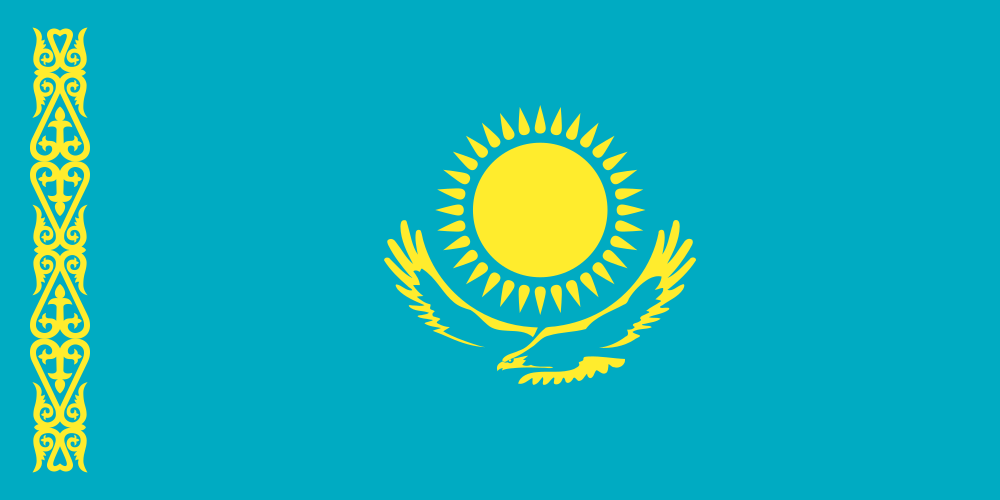
Capital: Astana
Population: 20,843,754
Area: 2,724,900 km²
Currency: KZT
Languages: Kazakh, Russian
Religions: Islam, Christianity
Time zone: UTC+5 & UTC+6
Kazakhstan is the world's largest landlocked country, located in Central Asia and extending into Eastern Europe. With a vast area of 2,724,900 square kilometers and a population of approximately 20.8 million people, Kazakhstan is the ninth-largest country in the world by land area. It is bordered by Russia to the north, China to the east, Kyrgyzstan, Uzbekistan, and Turkmenistan to the south, and has a coastline along the Caspian Sea to the west. The capital was moved from Almaty to Astana (now Nur-Sultan) in 1997, making it one of the world's newest capital cities. Kazakhstan gained independence from the Soviet Union in 1991 and has since emerged as the most economically developed Central Asian nation.
Kazakhstan's geography is remarkably diverse, encompassing vast steppes, deserts, mountains, and river valleys. The country features the Kazakh Steppe, one of the world's largest dry steppes, and the Kyzylkum and Karakum deserts. The Tian Shan mountain range in the southeast includes peaks exceeding 7,000 meters. The Caspian Sea shoreline extends for over 2,000 kilometers. Kazakhstan experiences extreme continental climate with hot summers and very cold winters, with temperature variations among the most extreme on Earth. The country is home to diverse ecosystems and wildlife, including the critically endangered saiga antelope. The Baikonur Cosmodrome, the world's first and largest operational space launch facility, is located in Kazakhstan. Lake Balkhash is unique as one half is freshwater and the other half is saline.
Kazakhstan has the largest and most developed economy in Central Asia, with a GDP per capita of approximately $11,000. The economy is heavily dependent on its vast mineral and energy resources, including oil, natural gas, uranium (world's largest producer), copper, zinc, and other minerals. The country has attracted significant foreign investment in its extractive industries. Agriculture is important, with Kazakhstan being a major grain producer and exporter. The government has been pursuing economic diversification through its "Kazakhstan 2050" strategy, focusing on developing manufacturing, technology, and services. The country uses the Kazakhstani Tenge (KZT) as its currency. Both Kazakh and Russian are official languages, reflecting the country's diverse population. Kazakhstan is a member of various economic unions and has positioned itself as a bridge between Europe and Asia. The Khorgos Gateway on the Chinese border is becoming an important logistics hub for the Belt and Road Initiative.
Kazakh culture reflects a blend of nomadic Turkic traditions and Russian influences from the Soviet period. The Kazakh language is the state language, while Russian serves as an official language and is widely used in business and everyday communication. The country is predominantly Muslim, with a significant Russian Orthodox Christian minority. Traditional Kazakh culture centered on nomadic pastoralism, with expertise in horse breeding and riding remaining important cultural elements. The yurt (nomadic tent) remains a cultural symbol, though most Kazakhs now live in permanent settlements. Kazakh cuisine features dishes like beshbarmak (the national dish), kazy (horse meat sausage), and kumis (fermented mare's milk). Traditional music includes epic poems performed with the dombra, a two-stringed lute. Kazakhstan celebrates Nauryz (spring equinox) as the most important cultural festival. The country has been working to revive Kazakh cultural identity while maintaining its multiethnic character. Eagle hunting, particularly with golden eagles, is an ancient tradition still practiced. Kazakhstan's rich cultural heritage includes contributions to mathematics, philosophy, and literature, and the country has been investing in cultural preservation and promotion as part of nation-building efforts.
Major Cities
- Almaty - Largest city with 2.2 million people, former capital and still the commercial and cultural heart of Kazakhstan
- Astana (Nur-Sultan) - Current capital with 1.4 million people, a modern planned city built since 1997 with futuristic architecture
- Shymkent - Southern city with 1.1 million people, an important industrial center and the third-largest city
- Karaganda - Central city with 500,000 people, a major coal mining and industrial center from the Soviet era
- Aktobe - Western city with 500,000 people, an important regional center for oil and mineral extraction
Interesting Facts
- Kazakhstan is the world's largest landlocked country and the 9th largest country overall at 2,724,900 km²
- The Baikonur Cosmodrome is the world's first and largest operational space launch facility, where Yuri Gagarin began his historic flight
- Kazakhstan is the world's largest producer of uranium, accounting for over 40% of global supply
- The country spans two continents, with a small portion west of the Ural River located in Eastern Europe
- Lake Balkhash is unique - half of the lake contains freshwater while the other half is saline
- Eagle hunting with golden eagles is an ancient Kazakh tradition still practiced, particularly by the Berkutchi hunters