Kuwait Map
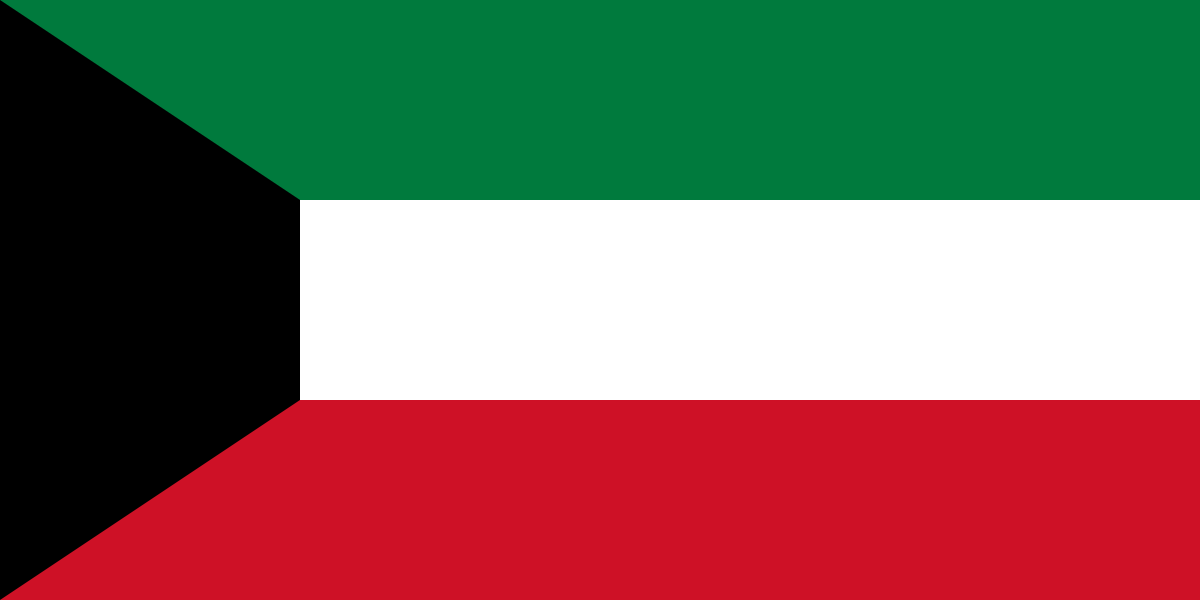
Capital: Kuwait City
Population: 5,026,078
Area: 17,818 km²
Currency: KWD
Languages: Arabic
Religions: Islam
Time zone: UTC+3
Kuwait is a small but prosperous nation located at the northern edge of the Arabian Gulf in Western Asia. Covering an area of 17,818 square kilometers, Kuwait is bordered by Iraq to the north and Saudi Arabia to the south, with its eastern coastline along the Persian Gulf. The country has a population of approximately 5 million people, with Kuwait City serving as the vibrant capital and largest urban center. Kuwait gained independence from British protection in 1961 and has since developed into one of the wealthiest nations in the world, primarily due to its substantial petroleum reserves.
The geography of Kuwait is predominantly flat desert terrain, with the highest point reaching only 306 meters above sea level. The country experiences an arid climate with extremely hot summers, where temperatures can exceed 50°C, and mild winters. Kuwait Bay, a natural harbor, has historically been central to the nation's maritime trade and pearl diving heritage. The country includes nine small islands, with Failaka Island being the largest and most historically significant. Despite scarce rainfall averaging less than 120mm annually, Kuwait has invested heavily in desalination plants to meet its freshwater needs.
Kuwait possesses approximately 6% of the world's oil reserves, making petroleum the backbone of its economy and accounting for over 90% of export revenues. The country enjoys one of the highest GDP per capita rates globally, around $36,000, providing citizens with generous social welfare benefits, including free healthcare and education. Beyond oil, Kuwait has been diversifying its economy through investments in finance, real estate, and telecommunications. The Kuwait Investment Authority manages one of the world's oldest and largest sovereign wealth funds. The government has implemented Vision 2035, an ambitious plan to transform Kuwait into a regional financial and commercial hub.
Kuwaiti culture is deeply rooted in Islamic traditions and Bedouin heritage, while also embracing modernity and cosmopolitanism. Arabic is the official language, though English is widely spoken in business and education. The country has a rich maritime history, reflected in its traditional dhow boats and historical pearl diving industry. Kuwait is known for its architectural landmarks, including the iconic Kuwait Towers and the Grand Mosque. The nation celebrates its liberation from Iraqi occupation on February 26th each year. Kuwaiti society values hospitality, family ties, and maintaining a balance between preserving traditional values and embracing contemporary global influences.
Major Cities
- Kuwait City - The capital with 3.1 million people, Kuwait's political and economic center featuring the iconic Kuwait Towers and modern skyline
- Al Ahmadi - Southern city with 770,000 people, center of Kuwait's oil industry and refinery operations
- Hawalli - Coastal city with 165,000 people, densely populated area known for shopping and entertainment
- Al Farwaniyah - Western city with 85,000 people, primarily a residential area near Kuwait City
- Al Jahra - Northwestern city with 450,000 people, agricultural center and site of the historic Red Fort
Interesting Facts
- Kuwait has approximately 6% of the world's oil reserves, making it one of the richest countries per capita globally
- The Kuwait Towers are iconic landmarks featuring distinctive spherical water reservoirs visible throughout the city
- Kuwait was historically a major pearl diving center before oil was discovered in 1938
- The country celebrates Liberation Day on February 26 each year, commemorating the end of Iraqi occupation in 1991
- Kuwait has one of the world's oldest sovereign wealth funds, the Kuwait Investment Authority, established in 1953
- Despite its small size, Kuwait provides citizens with free healthcare, education, and generous social welfare benefits