Kyrgyzstan Map
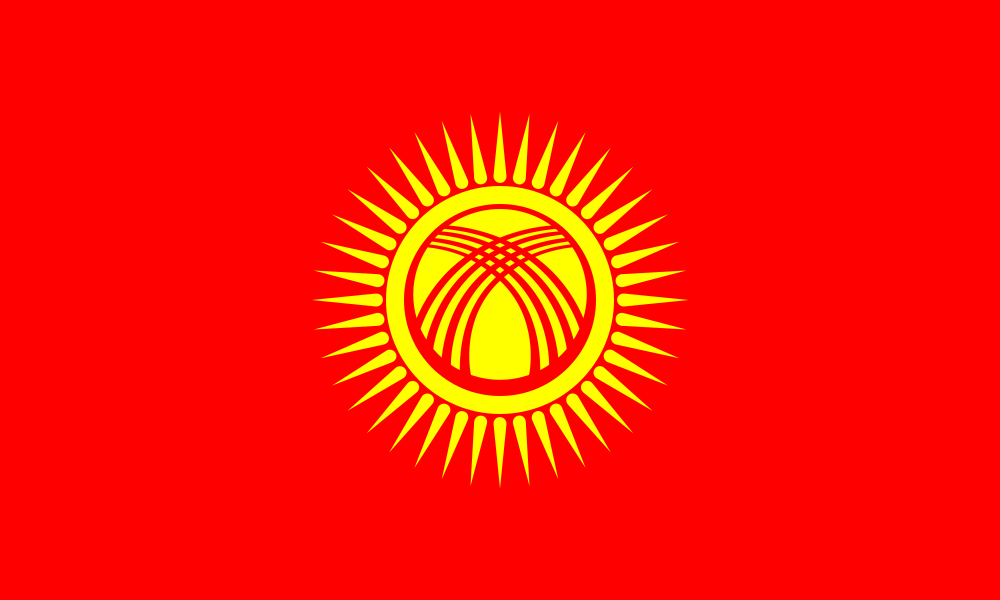
Capital: Bishkek
Population: 7,295,034
Area: 199,951 km²
Currency: KGS
Languages: Kyrgyz, Russian
Religions: Islam
Time zone: UTC+6
Kyrgyzstan is a landlocked mountainous country located in Central Asia, often referred to as the "Switzerland of Central Asia" due to its stunning alpine landscapes. Covering an area of 199,951 square kilometers with a population of approximately 7.3 million people, Kyrgyzstan is bordered by Kazakhstan to the north, Uzbekistan to the west, Tajikistan to the south, and China to the east. The capital city, Bishkek, serves as the country's political, economic, and cultural center. Kyrgyzstan gained independence from the Soviet Union in 1991 and has since developed as a parliamentary republic.
The geography of Kyrgyzstan is dominated by the Tian Shan and Pamir mountain ranges, with approximately 90% of the country lying above 1,500 meters elevation. The highest peak, Jengish Chokusu (Victory Peak), reaches 7,439 meters. The country is home to the stunning Issyk-Kul Lake, the world's second-largest alpine lake and one that never freezes despite its high altitude. Kyrgyzstan experiences a continental climate with significant temperature variations between seasons and altitudes. The mountainous terrain supports diverse ecosystems, from alpine meadows called jailoos to glaciers that feed numerous rivers. These natural features make Kyrgyzstan a paradise for outdoor enthusiasts and adventure tourism.
Kyrgyzstan's economy remains one of the smallest in Central Asia, with a GDP per capita of approximately $1,300. The country relies heavily on agriculture, particularly livestock farming, and the cultivation of cotton, tobacco, and vegetables in fertile valleys. Gold mining at the Kumtor mine is a significant contributor to the economy and exports. Remittances from Kyrgyz workers abroad, particularly in Russia and Kazakhstan, constitute a substantial portion of national income. Hydroelectric power generation is important both for domestic use and potential exports. The country has been working to develop its tourism sector, leveraging its natural beauty and nomadic heritage, though economic development faces challenges including corruption and political instability.
Kyrgyz culture is deeply rooted in nomadic traditions that have persisted for centuries. The Kyrgyz language is the state language, while Russian remains widely spoken and serves as an official language, reflecting the country's Soviet past. The country is predominantly Muslim, with most following Sunni Islam, though shamanistic traditions still influence cultural practices. Kyrgyzstan is famous for its epic of Manas, one of the world's longest epic poems, which is central to national identity. Traditional yurts, called "boz ui," remain important in rural life and celebrations. Felt crafts, particularly shyrdak carpets and kalpak hats, represent important cultural traditions. Horse culture is central to Kyrgyz identity, with games like kok-boru (a traditional horseback sport) maintaining popularity. The country celebrates Nooruz, the Persian New Year, as a major cultural festival marking spring's arrival.
Major Cities
- Bishkek - The capital and largest city with 1.1 million people, Kyrgyzstan's political and economic center in the Chui Valley
- Osh - Southern city with 320,000 people, Kyrgyzstan's second-largest city and ancient Silk Road hub over 3,000 years old
- Jalal-Abad - Western city with 120,000 people, administrative center in the Fergana Valley known for walnut forests
- Karakol - Eastern city with 75,000 people, gateway to Issyk-Kul Lake and base for mountain trekking
- Tokmok - Northern city with 60,000 people, near the ancient Silk Road city of Balasagun
Interesting Facts
- Kyrgyzstan is called the "Switzerland of Central Asia" due to its stunning alpine mountains covering 90% of the country
- Issyk-Kul is the world's second-largest alpine lake that never freezes despite being surrounded by snowy peaks
- The epic of Manas is one of the world's longest epic poems, with over 500,000 lines celebrating Kyrgyz history and culture
- Kyrgyzstan is one of the few countries where nomadic traditions continue, with many herders still using yurts seasonally
- The country's highest peak, Jengish Chokusu (Victory Peak), reaches 7,439 meters on the Chinese border
- Kok-boru, a traditional horseback game similar to polo but played with a goat carcass, is the national sport