Maldives Map
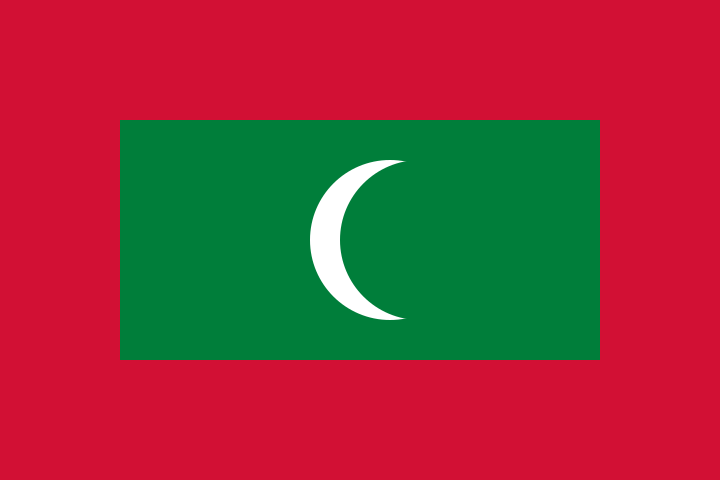
Capital: Malé
Population: 529,676
Area: 298 km²
Currency: MVR
Languages: Dhivehi
Religions: Islam
Time zone: UTC+5
The Maldives is a tropical island nation located in the Indian Ocean, southwest of India and Sri Lanka. Composed of approximately 1,190 coral islands grouped into 26 atolls, the Maldives has a total land area of just 298 square kilometers, making it Asia's smallest country by land area. With a population of approximately 530,000 people, the capital city Male is one of the world's most densely populated cities. The Maldives is also the world's lowest-lying country, with an average elevation of just 1.5 meters above sea level, making it extremely vulnerable to climate change and sea-level rise. The country gained independence from British protection in 1965 and became a republic in 1968.
The Maldives' unique geography consists of coral atolls and reef formations spread across approximately 90,000 square kilometers of ocean. The highest natural point in the country is only about 2.4 meters above sea level. Each atoll consists of a coral reef encircling a lagoon, with islands formed from accumulated coral debris and sand. The country experiences a tropical monsoon climate, with two distinct seasons: the dry northeast monsoon from December to March and the wet southwest monsoon from May to October. The crystal-clear waters surrounding the islands host an incredibly rich marine ecosystem, including over 2,000 species of fish, sea turtles, manta rays, and whale sharks. The fragile coral reef ecosystems are both the foundation of the islands and crucial for protecting them from ocean waves.
The Maldivian economy is heavily dependent on tourism, which accounts for approximately 28% of GDP and over 60% of foreign exchange earnings. The country has developed a successful high-end tourism model, with luxury resort islands attracting visitors from around the world to experience pristine beaches, exceptional diving and snorkeling, and overwater bungalows. Fishing, particularly tuna fishing, has traditionally been important and remains the second-largest sector. The GDP per capita is approximately $12,000. The country uses the Maldivian rufiyaa as its currency, though US dollars are widely accepted in tourist areas. The government has been working to diversify the economy and develop sectors such as shipping, boat building, and handicrafts. Climate change poses an existential threat to the low-lying nation, driving efforts to invest in coastal protection and even consider relocating the population if necessary.
Maldivian culture is a unique blend of influences from South Asia, Arab countries, and Africa, reflecting the islands' historical position along ancient maritime trade routes. Dhivehi, an Indo-Aryan language with its own script called Thaana, is the official language, though English is widely spoken in tourism areas. Islam is the state religion, with all citizens required to be Muslim, and Islamic principles strongly influence daily life and law. Traditional Maldivian culture includes distinctive music and dance forms like boduberu (big drum) performances, which show African influences. The country is famous for its traditional lacquerwork, mat weaving, and boat building. Maldivian cuisine features abundant seafood, coconut, and influences from Indian and Sri Lankan cooking. The people have a deep connection to the ocean, with fishing and seafaring traditions passed down through generations. Despite modernization and tourism development, Maldivians maintain strong community ties and Islamic values while facing the challenge of preserving their islands against rising seas.
Major Cities
- Malé - The capital with 215,000 people, one of the world's most densely populated cities on a 5.8 km² island
- Addu City - Southern city with 35,000 people, the second-largest urban area comprising several islands linked by causeways
- Fuvahmulah - Island city with 13,000 people, unique as a single-island atoll with diverse ecosystems
- Kulhudhuffushi - Northern city with 10,000 people, the regional capital of the northern atolls
- Thinadhoo - Southern city with 7,000 people, a historic settlement in the Huvadhu Atoll
Interesting Facts
- The Maldives is the world's lowest-lying country with an average elevation of just 1.5 meters above sea level
- Asia's smallest country by land area at only 298 km², yet spread across 90,000 km² of ocean with 1,190 coral islands
- The country pioneered luxury overwater bungalows, now an iconic feature of tropical resort destinations worldwide
- Maldives has its own unique script called Thaana, written right to left like Arabic but based on Indo-Aryan language
- The islands are extremely vulnerable to climate change, making the Maldives one of the first countries threatened by rising sea levels
- Tourism contributes 28% of GDP and over 60% of foreign exchange, making it the economic backbone of the nation