Mongolia Map
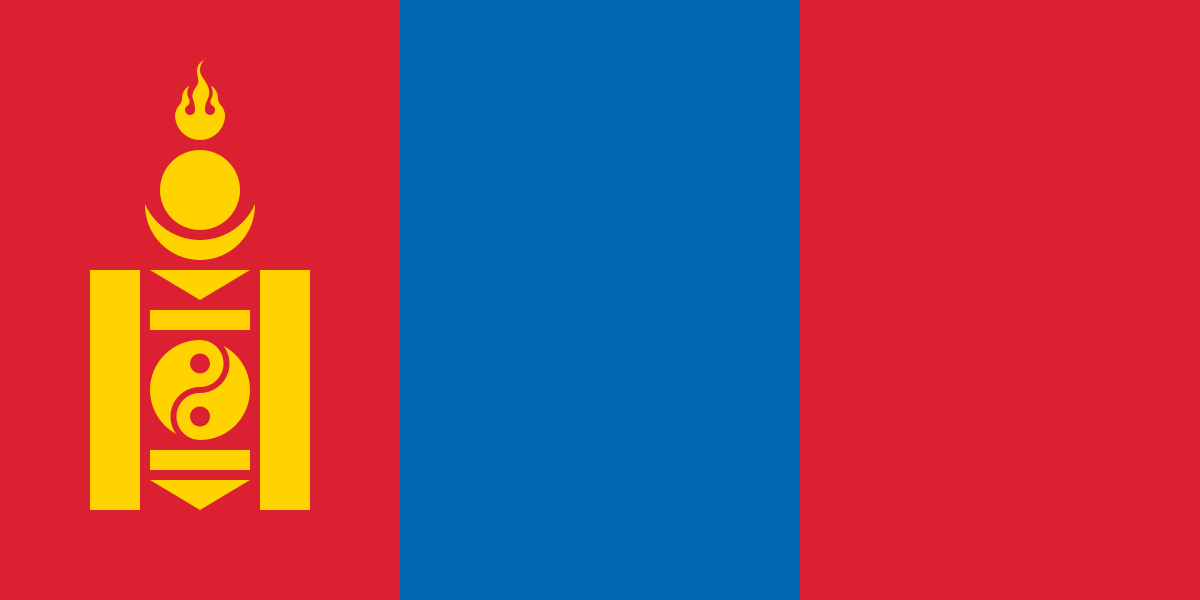
Capital: Ulaanbaatar
Population: 3,517,100
Area: 1,564,116 km²
Currency: MNT
Languages: Mongolian
Religions: Buddhism
Time zone: UTC+7
Mongolia is a vast landlocked country in East Asia, renowned as the world's most sparsely populated sovereign nation. Covering an impressive 1,564,116 square kilometers with a population of only 3.5 million people, Mongolia is bordered by Russia to the north and China to the south. The capital city, Ulaanbaatar, is home to nearly half of the country's population and serves as the political, economic, and cultural center. Mongolia gained independence from China in 1911 and later became the second communist country in the world, before transitioning to democracy in 1990.
Mongolia's geography is dominated by vast steppes, rugged mountains, and the expansive Gobi Desert in the south. The country experiences extreme continental climate conditions, with temperatures ranging from -40°C in winter to 40°C in summer, making it one of the most extreme climates on Earth. The Altai Mountains in the west reach heights exceeding 4,000 meters, while the eastern regions feature endless grasslands. Mongolia is home to diverse wildlife, including the rare snow leopard, Gobi bear, and wild Bactrian camel. The country's numerous lakes and rivers, including Lake Khuvsgul, support unique ecosystems and provide vital water resources.
Mongolia's economy has traditionally been based on nomadic animal herding, which still employs about 30% of the population and remains culturally significant. However, the discovery of vast mineral deposits has transformed the economic landscape, with mining now accounting for a substantial portion of GDP. Copper, coal, gold, and other minerals have attracted significant foreign investment. The GDP per capita stands at approximately $5,000. Cashmere production from goat herding is another important export. The government is working to diversify the economy and develop infrastructure, though the country faces challenges related to resource dependence and environmental sustainability.
Mongolian culture is deeply rooted in nomadic traditions and Buddhist heritage. The Mongolian language uses the Cyrillic script, though traditional Mongolian script is experiencing a revival. Mongolia is famous for its connection to Genghis Khan, who founded the largest contiguous land empire in history during the 13th century. Traditional practices such as throat singing, horsehead fiddle music, and eagle hunting continue to thrive. The annual Naadam Festival celebrates wrestling, horse racing, and archery. Mongolian gers (yurts) remain common dwellings, especially in rural areas. Buddhism, particularly Tibetan Buddhism, plays a central role in cultural identity, with monasteries serving as important cultural and spiritual centers throughout the country.
Major Cities
- Ulaanbaatar - The capital and largest city with 1.6 million people, home to nearly half of Mongolia's population and the political and economic center
- Erdenet - Northern city with 100,000 people, Mongolia's second-largest city and center of copper mining
- Darkhan - Industrial city with 75,000 people, established in 1961 as a Soviet-era industrial center
- Choibalsan - Eastern city with 40,000 people, named after a communist-era leader and regional center
- Khovd - Western city with 30,000 people, multiethnic city near the Altai Mountains
Interesting Facts
- Mongolia is the world's most sparsely populated sovereign nation with just 2 people per square kilometer
- Genghis Khan founded the Mongol Empire in 1206, which became the largest contiguous land empire in history
- The country experiences one of the world's most extreme temperature ranges, from -40°C to 40°C seasonally
- Mongolian throat singing (khoomei) is a unique vocal technique producing multiple pitches simultaneously
- The Naadam Festival celebrates the "three manly games" of wrestling, horse racing, and archery every July
- Mongolia has one of the last remaining nomadic populations, with about 30% still following traditional herding lifestyles