North Korea Map
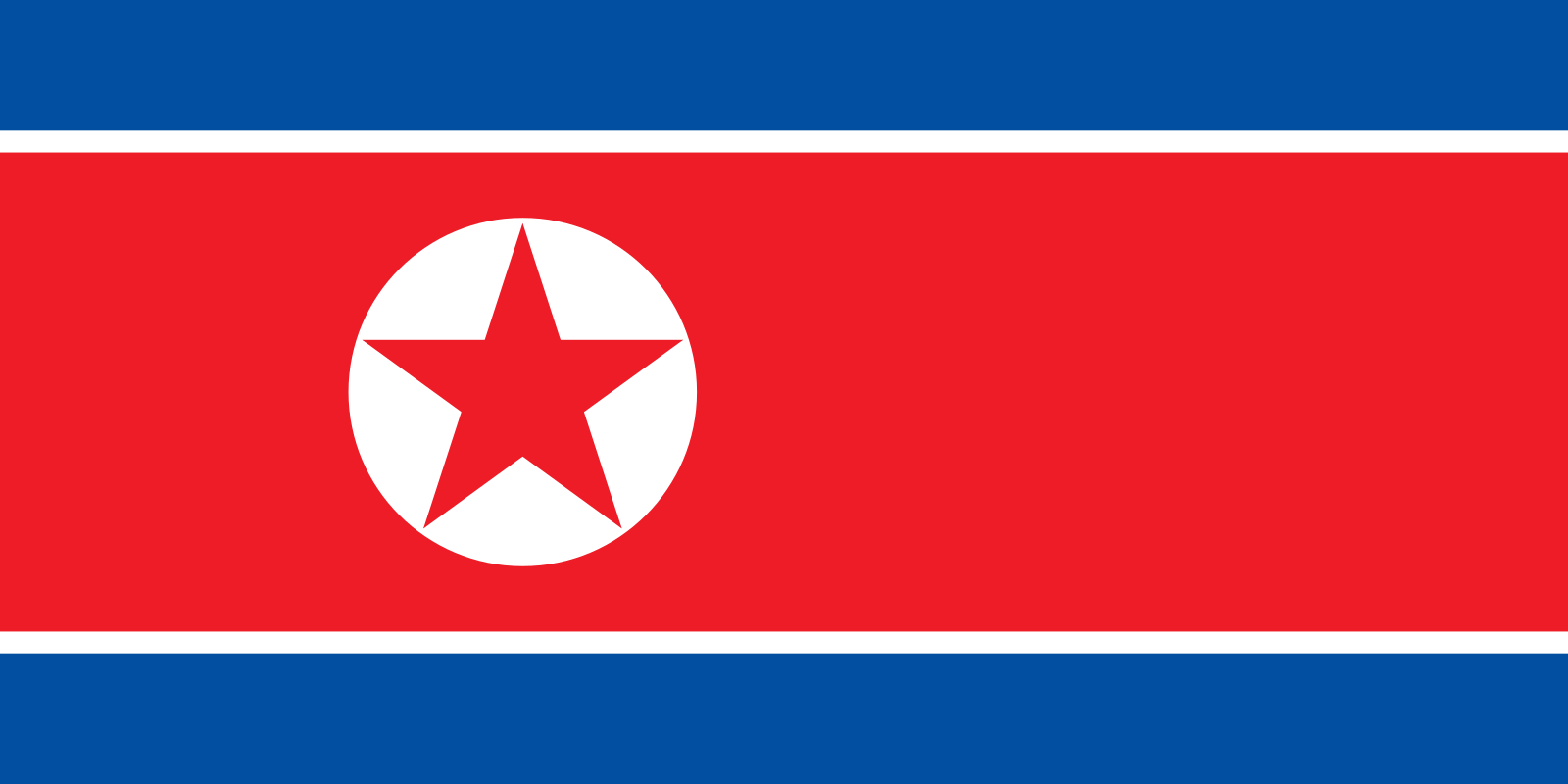
Capital: Pyongyang
Population: 26,571,036
Area: 120,538 km²
Currency: KPW
Languages: Korean
Religions: Juche, Buddhism
Time zone: UTC+9
About North Korea
North Korea, officially the Democratic People's Republic of Korea (DPRK), occupies the northern portion of the Korean Peninsula in East Asia, bordered by China to the north, Russia to the northeast, and South Korea to the south. Covering approximately 120,538 square kilometers, North Korea is home to over 26 million people. The country features extensive coastlines along the Yellow Sea to the west and the East Sea (Sea of Japan) to the east, though it remains one of the world's most isolated and secretive nations.
North Korea was established in 1948 following the division of the Korean Peninsula after World War II, developing into a socialist state under the Kim dynasty that continues to this day. Korean is the official language, and the state ideology of Juche (self-reliance) serves as the guiding philosophy, effectively replacing traditional religious practices. The country maintains strict state control over all aspects of life, with limited information flowing in or out. North Korean culture emphasizes collective identity, loyalty to the state, and preservation of Korean traditions, though heavily influenced by state propaganda and restrictions on outside cultural influences.
North Korea's geography is predominantly mountainous, with about 80% of the terrain covered by mountains and uplands, particularly in the north and east. The Paektu Mountain (2,744 meters) on the Chinese border is considered the sacred birthplace of the Korean nation. The western coastal plains are more suitable for agriculture and contain most of the population and arable land. The climate is continental with four distinct seasons, including cold, dry winters and warm, rainy summers. Major rivers include the Yalu and Tumen, which form natural borders with China and Russia.
North Korea operates a centrally planned economy with heavy emphasis on military spending and heavy industry, including mining, metallurgy, and machine building. Agriculture focuses on rice, corn, and potatoes, though the country has faced periodic food shortages. The country possesses significant mineral resources including coal, iron ore, and rare earth elements. Pyongyang, the capital and largest city, is the political, cultural, and economic center, featuring monumental architecture and wide boulevards. Other major cities include Hamhung (industrial center), Chongjin (port city), and Wonsan, though urbanization and development are limited compared to neighboring countries.
Major Cities
- Pyongyang - The capital and largest city with 3.1 million people, North Korea's political and cultural center with monumental architecture and wide boulevards
- Hamhung - Second-largest city with 770,000 people, major industrial center on the east coast specializing in chemicals and textiles
- Chongjin - Northern port city with 670,000 people, important industrial hub and North Korea's third-largest city
- Nampo - Western port city with 370,000 people, serving as Pyongyang's gateway to the Yellow Sea
- Wonsan - Eastern coastal city with 360,000 people, a port and tourist destination with beaches on the East Sea
Interesting Facts
- North Korea uses the Juche calendar based on Kim Il-sung's birth year (1912), making 2026 the year Juche 115
- Mount Paektu at 2,744 meters is considered sacred in Korean culture and claimed as the birthplace of Kim Jong-il
- The country has one of the world's largest standing armies, with over 1.2 million active military personnel
- Pyongyang's Ryugyong Hotel, at 330 meters tall, remains one of the world's tallest unoccupied buildings, under construction since 1987
- North Korea operates its own intranet called Kwangmyong, separate from the global internet, accessible to most citizens
- The Korean Demilitarized Zone (DMZ) between North and South Korea is one of the most heavily militarized borders in the world