Palestine Map
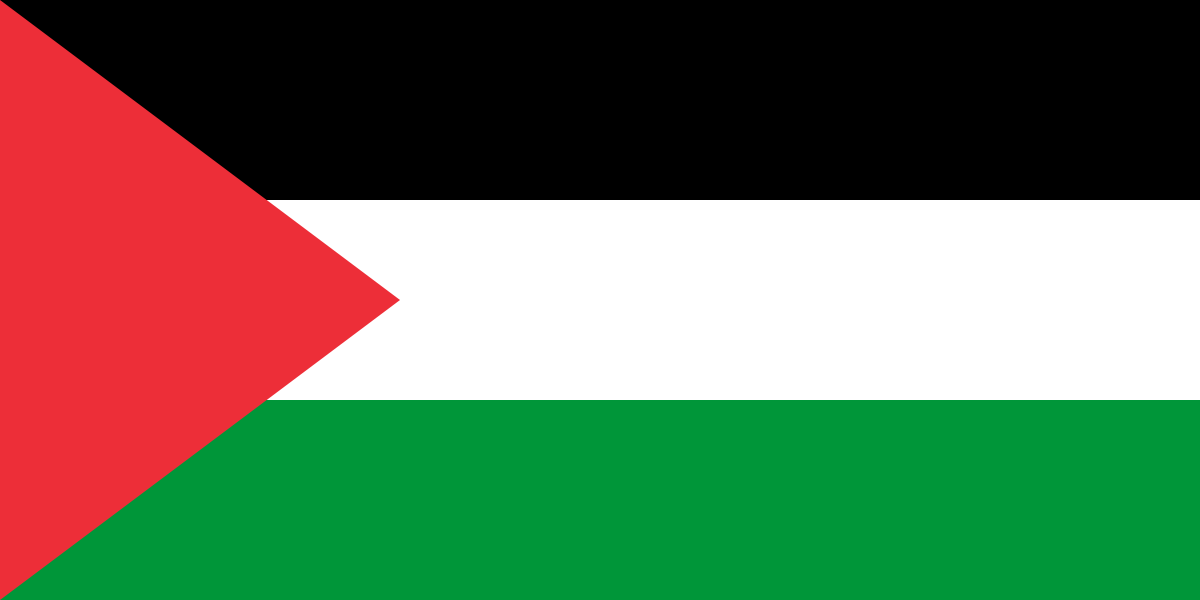
Capital: Ramallah
Population: 5,589,623
Area: 6,220 km²
Currency: ILS
Languages: Arabic
Religions: Islam, Christianity
Time zone: UTC+2
Palestine, located in Western Asia along the eastern Mediterranean coast, is a territory with deep historical and cultural significance. Comprising the West Bank and Gaza Strip, this region has been at the crossroads of civilizations for millennia. With an area of 6,220 square kilometers and a population of approximately 5.6 million people, Palestine is one of the most densely populated areas in the region. The administrative capital is Ramallah, while Jerusalem holds profound religious and cultural importance for Palestinians.
The geography of Palestine is characterized by diverse landscapes, from the Mediterranean coastline of Gaza to the mountainous terrain of the West Bank. The region experiences a Mediterranean climate with hot, dry summers and mild, rainy winters. The Jordan Valley, running along the eastern border, represents the lowest point on Earth's land surface. Despite limited natural resources and ongoing political challenges, Palestinian society maintains strong agricultural traditions, particularly in olive cultivation, which has been practiced for thousands of years.
Palestine's economy faces significant challenges due to political restrictions and limited sovereignty. The Palestinian territories rely heavily on agriculture, small-scale manufacturing, and international aid. Olive oil production, stone quarrying, and handicrafts are important economic activities. Remittances from Palestinians working abroad contribute substantially to household incomes. The service sector, including education and healthcare, employs a large portion of the workforce. Despite economic constraints, Palestinians maintain high literacy rates and a strong emphasis on education.
Palestinian culture is rich and deeply rooted in Arab and Islamic heritage, with significant Christian minorities contributing to the cultural fabric. The region is home to numerous UNESCO World Heritage sites, including the old cities of Jerusalem and Hebron. Traditional Palestinian embroidery, music, and cuisine reflect centuries of cultural development. The Arabic language serves as the primary medium of communication, while English is widely taught in schools. Palestinian society is known for its strong family bonds, hospitality, and resilience in preserving cultural identity and traditions across generations.
Major Cities
- Gaza City - Largest city with 750,000 people, the main urban center in the Gaza Strip along the Mediterranean coast
- Hebron - West Bank city with 220,000 people, one of the oldest continuously inhabited cities in the world
- Nablus - Northern city with 156,000 people, known for its old city, soap-making tradition, and knafeh pastry
- Ramallah - Administrative capital with 38,000 people, the de facto political and economic center of the West Bank
- Khan Yunis - Southern Gaza city with 205,000 people, an important agricultural and commercial center
Interesting Facts
- Palestine is home to some of the world's oldest cities, with Jericho dating back over 10,000 years of continuous settlement
- The region contains numerous UNESCO World Heritage sites including the Church of the Nativity in Bethlehem
- Palestinian olive trees are among the oldest in the world, with some specimens over 3,000 years old still producing fruit
- Traditional Palestinian embroidery (tatreez) features intricate patterns that vary by region and tell stories of cultural heritage
- Despite challenges, Palestinians maintain one of the highest literacy rates in the Middle East at over 96%
- The Dead Sea, the lowest point on Earth at 430 meters below sea level, borders the eastern edge of the West Bank