Tajikistan Map
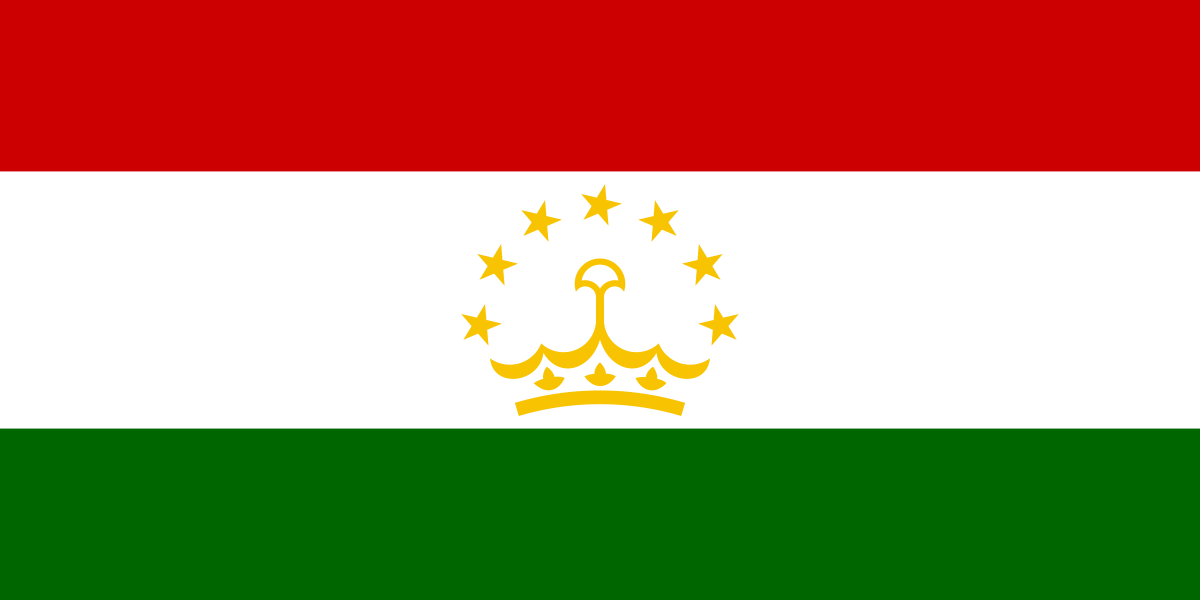
Capital: Dushanbe
Population: 10,786,734
Area: 143,100 km²
Currency: TJS
Languages: Tajik
Religions: Islam
Time zone: UTC+5
Tajikistan is a landlocked mountainous country located in Central Asia. With an area of 143,100 square kilometers and a population of approximately 10.8 million people, Tajikistan is bordered by Afghanistan to the south, Uzbekistan to the west and north, Kyrgyzstan to the north, and China to the east. The capital city, Dushanbe, serves as the political, economic, and cultural center. Tajikistan gained independence from the Soviet Union in 1991 and subsequently experienced a devastating civil war from 1992 to 1997. The country is now a presidential republic, though it faces ongoing challenges related to political stability and economic development.
Tajikistan is one of the most mountainous countries in the world, with over 90% of its territory covered by mountains. The country is dominated by the Pamir and Alay mountain ranges, earning it the nickname "Roof of the World." The highest peak, Ismoil Somoni Peak (formerly Peak Communism), reaches 7,495 meters. The Pamir Highway, one of the world's highest international roads, runs through the country. Tajikistan experiences a continental to polar climate depending on elevation, with harsh winters and mild summers. The Fedchenko Glacier, the world's longest non-polar glacier, is located in Tajikistan. Rivers including the Amu Darya and Syr Darya originate in the country's mountains, making Tajikistan crucial for Central Asia's water resources. The dramatic mountain landscapes support limited but unique biodiversity, including snow leopards and Marco Polo sheep.
Tajikistan has one of the lowest GDPs per capita in Central Asia, at approximately $1,100, making it one of the poorest countries in the region. The economy relies heavily on remittances from Tajik migrant workers in Russia, which can account for up to 30% of GDP. Agriculture employs the majority of the workforce, with cotton being the main cash crop, though production has declined since Soviet times. Aluminum production at the Tajik Aluminum Company (TALCO) is the largest industrial enterprise and major export. Hydroelectric power generation is significant, with Tajikistan having substantial untapped hydropower potential. The country uses the Tajikistani Somoni (TJS) as its currency. Tourism is slowly developing, particularly adventure tourism in the Pamir Mountains. However, the economy faces numerous challenges including limited infrastructure, dependence on foreign aid, corruption, and geographic isolation.
Tajik culture is deeply influenced by Persian heritage, as Tajiks are the only Persian-speaking people in Central Asia. The Tajik language, closely related to Farsi, is the official language and uses the Cyrillic script, though there are movements to adopt the Latin or Persian alphabets. The majority of the population practices Sunni Islam, though the Soviet period left a legacy of secularism that still influences society. Tajikistan has a rich cultural heritage connected to the Silk Road and Persian civilization, with ancient cities like Penjikent showcasing this history. Traditional Tajik culture values hospitality, with elaborate ceremonies surrounding tea drinking and meals. The country is known for traditional crafts including embroidery, carpet weaving, and woodcarving. Tajik cuisine features dishes like plov (rice pilaf), sambusa, and qurutob. Music and poetry are central to cultural identity, with traditional instruments like the rubab and tanbur still widely played. The celebration of Navruz (Persian New Year) is the most important cultural festival, symbolizing spring and renewal. Despite economic hardships, Tajiks maintain strong family bonds and cultural pride in their Persian heritage.
Major Cities
- Dushanbe - The capital and largest city with 1.2 million people, Tajikistan's political and economic center located in the western Hissar Valley
- Khujand - Northern city with 192,000 people, the country's second-largest city and an important Silk Road trading center
- Kulob - Southern city with 106,000 people, commercial center near the Afghan border
- Bokhtar - Formerly Qurghonteppa, with 115,000 people, located in the fertile Vakhsh River valley
- Istaravshan - Ancient city with 63,000 people, over 2,500 years old with historical significance on the Silk Road
Interesting Facts
- Over 90% of Tajikistan is mountainous, earning it the nickname "Roof of the World" alongside its Pamir neighbor regions
- The Fedchenko Glacier is the world's longest non-polar glacier at 77 kilometers, located in the Pamir Mountains
- Ismoil Somoni Peak at 7,495 meters is the highest mountain in Tajikistan and the former Soviet Union
- The Pamir Highway is one of the world's highest international roads, reaching elevations over 4,600 meters
- Tajiks are the only Persian-speaking people in Central Asia, with language and culture closely related to Iran
- Remittances from workers abroad account for up to 30% of GDP, one of the highest rates globally