Timor-Leste Map
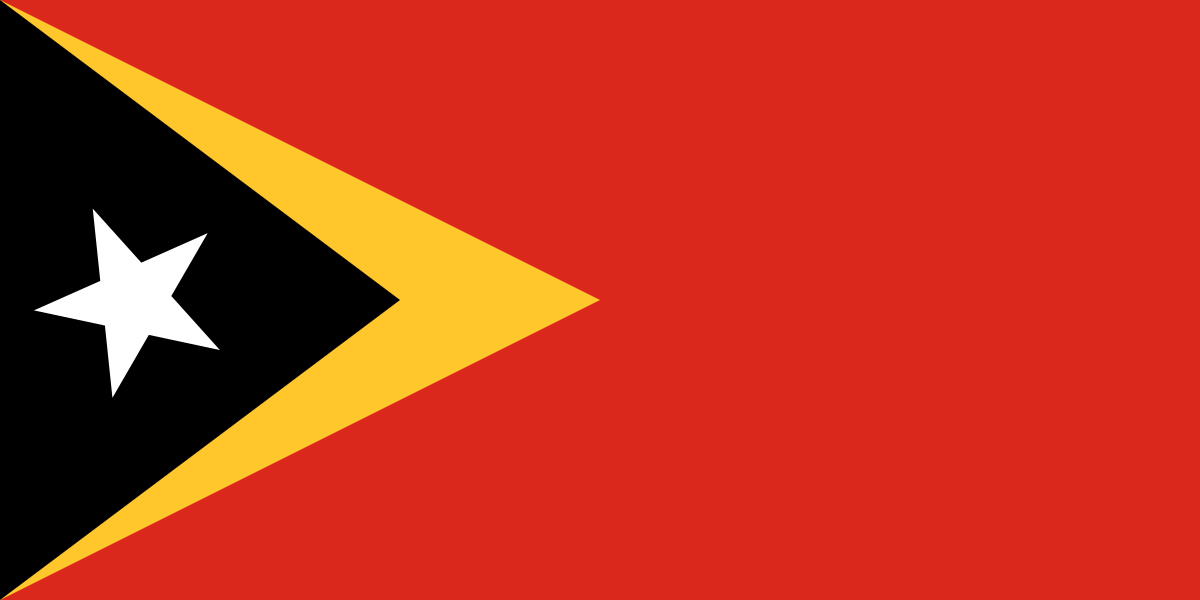
Capital: Dili
Population: 1,418,517
Area: 14,874 km²
Currency: USD
Languages: Tetum, Portuguese
Religions: Christianity
Time zone: UTC+9
Timor-Leste, also known as East Timor, is a young nation located in Southeast Asia, occupying the eastern half of the island of Timor. With an area of 14,874 square kilometers and a population of approximately 1.4 million people, the country also includes the Atauro and Jaco islands and an exclave called Oecusse surrounded by Indonesian West Timor. The capital and largest city, Dili, is located on the northern coast. Timor-Leste achieved independence from Indonesia in 2002, making it the first new sovereign state of the 21st century and Asia's youngest nation.
Timor-Leste's geography is characterized by rugged, mountainous terrain with the Ramelau Mountains dominating the landscape. Mount Ramelau, the country's highest peak, reaches 2,963 meters. The country has a tropical climate with distinct wet and dry seasons, and experiences monsoons that bring heavy rainfall from December to March. The coastline features coral reefs, making Timor-Leste a destination for diving enthusiasts. The terrain is largely covered with tropical forests and sandalwood trees, though deforestation has been an environmental concern. The country sits in a seismically active zone, experiencing occasional earthquakes. The diverse topography supports varied ecosystems and biodiversity unique to the region.
Timor-Leste's economy is one of the newest and least developed in Asia, with a GDP per capita of approximately $3,700. The economy relies heavily on offshore oil and gas reserves in the Timor Sea, which provide the majority of government revenue through the Timor-Leste Petroleum Fund, a sovereign wealth fund designed to manage resource revenues for future generations. Agriculture employs the majority of the population, with coffee being the most important non-oil export, along with subsistence farming of corn, rice, and cassava. The country uses the United States dollar as its official currency. Economic challenges include high unemployment, particularly among youth, limited infrastructure, and dependence on oil revenues. The government is working to develop tourism, agriculture, and fisheries sectors to diversify the economy.
Timorese culture is a unique blend of indigenous Austronesian traditions, Portuguese colonial influence, and Indonesian elements. The country recognizes both Tetum and Portuguese as official languages, with Indonesian and English also widely spoken. Approximately 98% of the population is Catholic, a legacy of Portuguese colonization, though traditional animist beliefs persist alongside Christianity. Timor-Leste's culture is expressed through traditional tais weaving, which creates intricate textiles with symbolic patterns. Traditional houses, called uma lulik, serve as sacred structures for clan ceremonies. Music and dance remain important cultural expressions, with traditional instruments and Portuguese-influenced folk music. The country celebrates its independence day on May 20th with national pride. Despite its troubled path to independence, Timor-Leste is building its national identity while preserving diverse local traditions across its various ethnic groups.
Major Cities
- Dili - The capital and largest city with 280,000 people, located on the northern coast and serving as the political and economic center
- Baucau - Second-largest city with 16,000 people, a historic town on the northern coast with Portuguese colonial architecture
- Maliana - Western city with 22,000 people, located near the border with Indonesian West Timor
- Suai - Southern coastal city with 24,000 people, an important port and commercial center
- Lospalos - Eastern city with 28,000 people, the easternmost major settlement in Timor-Leste
Interesting Facts
- Timor-Leste gained independence in 2002, making it the first new sovereign state of the 21st century and Asia's youngest nation
- The country is one of only two predominantly Catholic nations in Asia, alongside the Philippines
- Timor-Leste coffee is highly regarded internationally, with organic mountain-grown beans being the main non-oil export
- The country uses the United States dollar as its official currency rather than issuing its own money
- Timor-Leste has the world's youngest median age for a country's leader when Xanana Gusmão became prime minister
- The Petroleum Fund manages oil and gas revenues for future generations, modeled after Norway's sovereign wealth fund