Turkmenistan Map
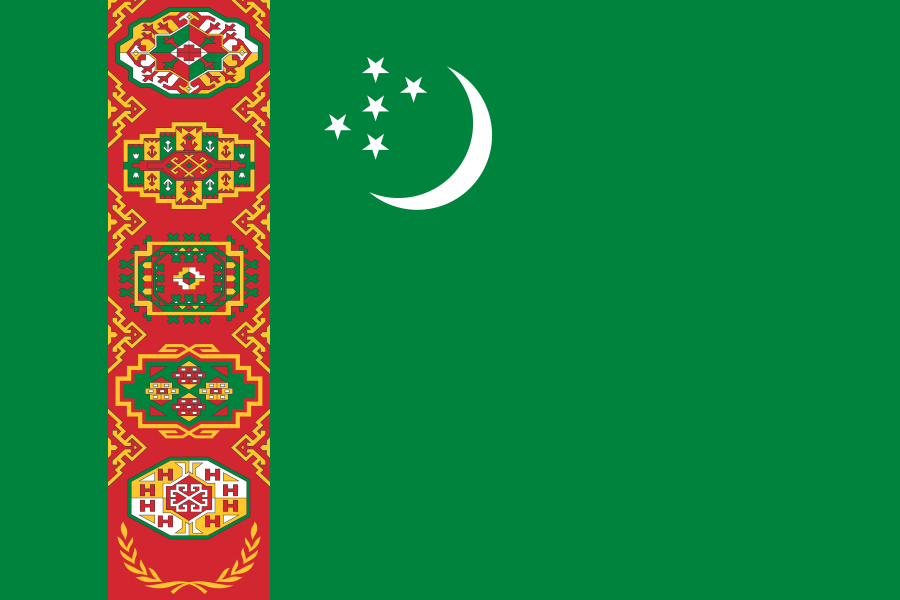
Capital: Ashgabat
Population: 7,618,847
Area: 488,100 km²
Currency: TMT
Languages: Turkmen
Religions: Islam
Time zone: UTC+5
Turkmenistan is a landlocked country in Central Asia, known for its vast deserts and rich natural gas reserves. Covering an area of 488,100 square kilometers with a population of approximately 7.6 million people, Turkmenistan is bordered by Kazakhstan to the northwest, Uzbekistan to the north and northeast, Afghanistan to the southeast, Iran to the south, and has a coastline along the Caspian Sea to the west. The capital city, Ashgabat, is famous for its white marble buildings and holds several Guinness World Records for its architectural grandeur. Turkmenistan gained independence from the Soviet Union in 1991 and maintains a policy of permanent neutrality.
Turkmenistan's geography is dominated by the Karakum Desert, which covers approximately 80% of the country's territory. The desert landscape features sand dunes, dried river beds, and sparse vegetation. The Kopet Dag mountain range runs along the southern border with Iran, providing a dramatic contrast to the flat desert plains. The Caspian Sea coastline to the west is approximately 1,768 kilometers long. The country experiences an extreme continental climate with scorching summers reaching over 50°C and cold winters. The Amu Darya River along the northeastern border provides vital water resources. Despite the harsh climate, oases and river valleys support agriculture and settlements.
Turkmenistan's economy is heavily dependent on its massive natural gas reserves, which are among the largest in the world. The energy sector dominates the economy, with gas and oil exports generating the majority of government revenue. The GDP per capita is approximately $8,000. Cotton production has historically been important, though it has declined in recent decades. The government maintains significant control over the economy, and the country has limited economic diversification. Manufacturing includes textiles and food processing. Turkmenistan has been investing in infrastructure development, including roads, railways, and pipelines to export its natural resources. The Turkmenbashy Refinery is one of the largest oil refineries in Central Asia.
Turkmen culture reflects a rich nomadic heritage combined with Islamic traditions. The Turkmen language is the official language and belongs to the Turkic language family. The country is predominantly Muslim, with most following Sunni Islam. Turkmenistan is famous for its Akhal-Teke horses, renowned for their speed, endurance, and distinctive metallic coat. Traditional crafts, particularly carpet weaving, are deeply valued, with Turkmen carpets being among the most prized in the world. The iconic design from Turkmen carpets even appears on the national flag. Traditional music features instruments like the dutar, and cultural celebrations often include horse racing and wrestling. The government promotes national identity through revival of historical figures and traditions, though it maintains strict control over society and limits contact with the outside world.
Major Cities
- Ashgabat - The capital with 1.2 million people, famous for white marble buildings holding multiple Guinness World Records for architectural grandeur
- Türkmenabat - Second-largest city with 280,000 people, located on the Amu Darya River in eastern Turkmenistan
- Daşoguz - Northern city with 280,000 people, agricultural center near the Uzbek border
- Mary - Ancient oasis city with 230,000 people, near the UNESCO site of ancient Merv on the Silk Road
- Balkanabat - Western city with 150,000 people, center of the oil and gas industry on the Caspian coast
Interesting Facts
- The Karakum Desert covers 80% of Turkmenistan, making it one of the world's most arid countries
- Ashgabat holds the Guinness World Record for the most buildings clad in white marble, creating a gleaming capital city
- The Akhal-Teke horse breed from Turkmenistan is known for its metallic sheen and appears on the national emblem
- Ancient Merv was once one of the largest cities in the world and a major Silk Road oasis city
- Turkmenistan has some of the world's largest natural gas reserves, ranking fourth globally
- The Darvaza gas crater, known as the "Door to Hell," has been burning continuously since 1971 in the Karakum Desert