Yemen Map
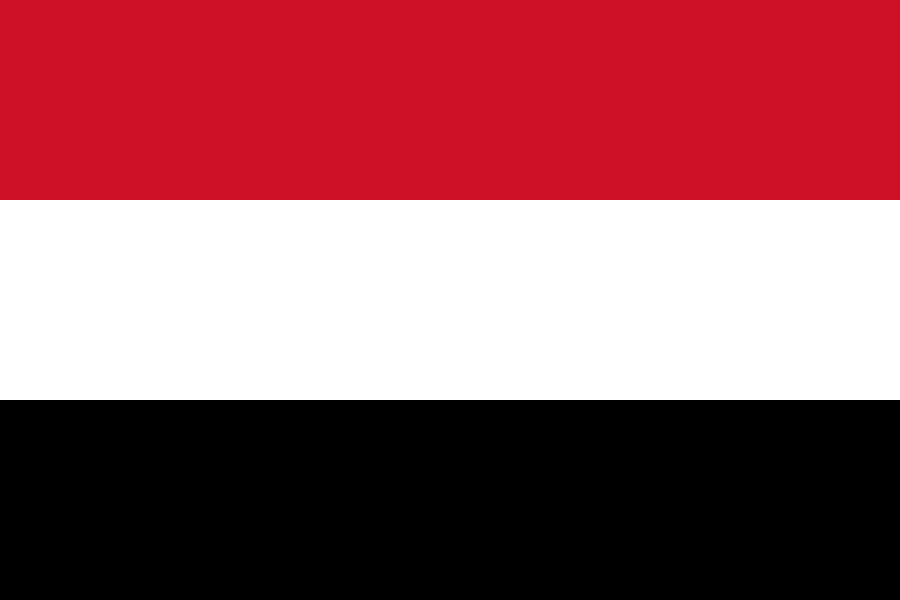
Capital: Sanaʽa
Population: 41,773,878
Area: 527,968 km²
Currency: YER
Languages: Arabic
Religions: Islam
Time zone: UTC+3
About Yemen
Yemen is located on the southern tip of the Arabian Peninsula in Western Asia, bordered by Saudi Arabia to the north, Oman to the east, and surrounded by the Red Sea, Gulf of Aden, and Arabian Sea. Covering approximately 527,968 square kilometers, Yemen is home to over 41 million people, making it one of the most populous countries on the Arabian Peninsula. The country's strategic location along ancient maritime trade routes has historically made it an important commercial center connecting Africa, Asia, and Europe.
Yemen has one of the oldest civilizations in the Arab world, with a history dating back to the ancient kingdoms of Saba (Sheba), known for the legendary Queen of Sheba. The region was historically known as "Arabia Felix" (Fortunate Arabia) due to its fertile highlands and prosperity from the frankincense trade. Arabic is the official language, and Islam is practiced by virtually the entire population. Yemeni culture is rich in poetry, traditional architecture featuring distinctive tower houses, and qat cultivation, with the old city of Sana'a being a UNESCO World Heritage site showcasing unique Islamic architecture.
Yemen's geography is remarkably diverse, ranging from the Tihama coastal plains along the Red Sea to the mountainous highlands in the west where peaks exceed 3,600 meters, and the arid desert regions of the Rub' al Khali in the east. The western highlands receive monsoon rains, making them the most fertile part of the Arabian Peninsula and earning Yemen the nickname "Green Arabia." The climate varies from tropical in the coastal lowlands to temperate in the mountains. The island of Socotra, often called the "Galapagos of the Indian Ocean," is home to unique flora and fauna found nowhere else on Earth.
Yemen's economy traditionally relied on agriculture, with coffee (particularly Mocha coffee), cotton, and qat being major crops, alongside fishing and small-scale industry. The country has modest oil and gas reserves that have been important revenue sources. Sana'a serves as the capital and largest city, situated in the highlands at over 2,200 meters elevation, making it one of the highest capital cities in the world. Other significant cities include Aden (the major port city and former capital), Taiz, and Hodeidah, though ongoing conflict has significantly impacted Yemen's economy and urban development.
Major Cities
- Sana'a - The capital with 2.9 million people, one of the world's oldest continuously inhabited cities at 2,250 meters elevation with distinctive tower-house architecture
- Aden - Historic port city with 900,000 people, Yemen's economic hub on the Gulf of Aden with a natural harbor
- Taiz - Yemen's cultural capital with 600,000 people, located in the highlands and known for its coffee production
- Hodeidah - Major Red Sea port with 600,000 people, crucial for Yemen's imports and trade
- Ibb - Highland city with 250,000 people, known as the "Green City" due to abundant rainfall and agriculture
Interesting Facts
- Yemen is home to the ancient kingdom of Saba (Sheba), whose queen famously visited King Solomon according to biblical and Islamic traditions
- Mocha coffee originated from the Yemeni port city of Mocha, which was once the world's primary coffee marketplace
- Socotra Island has 37% endemic plant species found nowhere else on Earth, including the iconic dragon's blood tree
- Old Sana'a features over 6,000 tower houses built before the 11th century, with distinctive geometric decorations
- Yemen was known in ancient times as "Arabia Felix" (Fortunate Arabia) for its relatively fertile highlands and frankincense trade
- The country is one of the oldest centers of civilization in the Near East, with evidence of human habitation dating back 2 million years